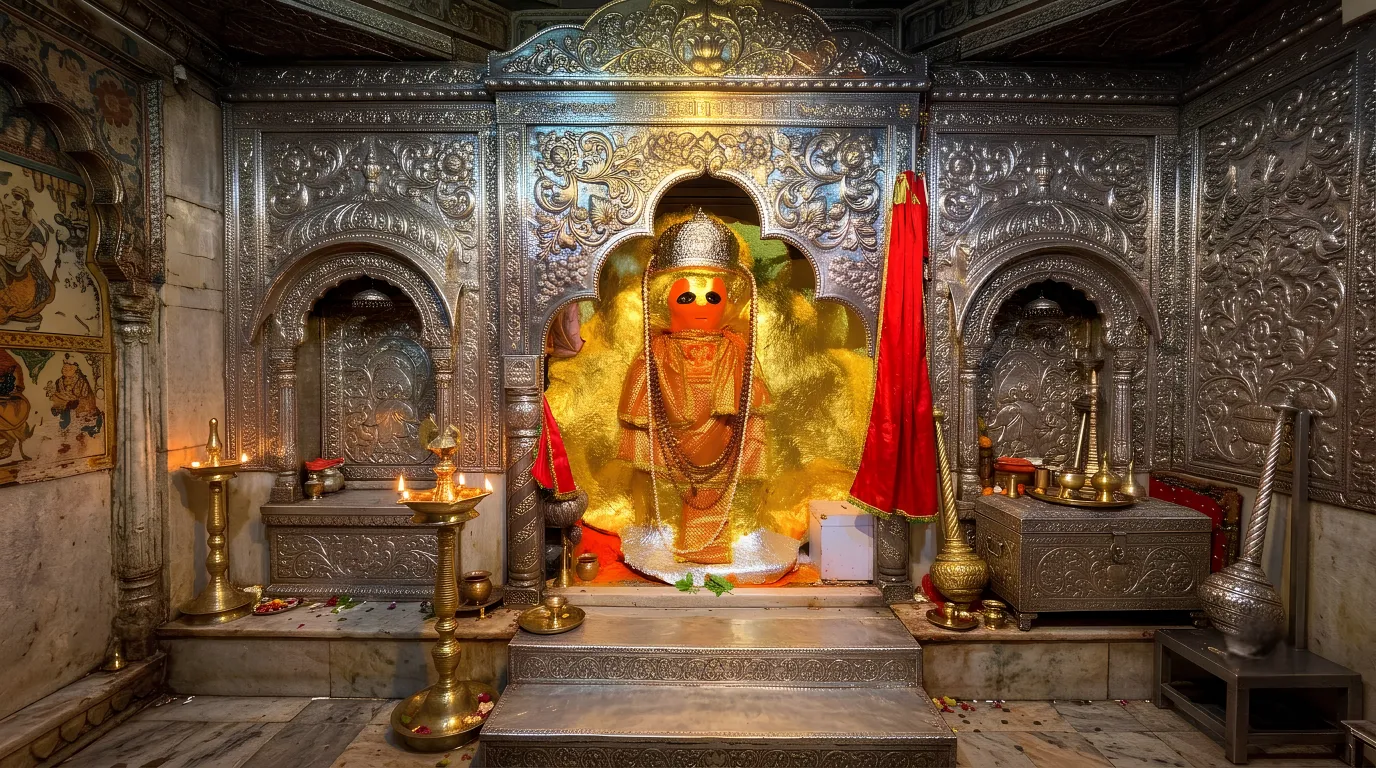
Discover the divine story, unique architecture, and spiritual significance of one of North India's most revered Hanuman temples.
The Panki Panchmukhi Hanuman Mandir is one of the most prominent spiritual landmarks in Northern India. It is widely believed that sincere prayers offered at this shrine help devotees find peace, strength, and protection from challenges.
The temple's unique spiritual character is defined by the diurnal changes of the deity's face, representing the different stages of life, and its historic connection to the modern saint Neem Karoli Baba.
The architectural features of Panki Dham reveal centuries of spiritual tradition and unique design.
The main spire is built in the classic North Indian Nagara style, decorated with intricate stone carvings and topped with a newly restored gold-plated Kalash (finial).
The walls of the main Mandapa are adorned with detailed stone reliefs and colorful frescoes that illustrate key scenes from the Ramayana, emphasizing Hanuman's selfless service.
The inner sanctum is lined with polished marble and ornate silver paneling, focusing attention on the self-manifested deity smeared in vermilion paste (Sindur) and silver leaf.
Adjacent to the main temple is the serene Neem Karoli Baba Ashram, which provides a quiet space for meditation and community gatherings.
Following a long-standing tradition, the inner sanctum does not have heavy wooden barrier doors or loud hanging bells, symbolizing that a devotee's prayers can reach the deity directly and without barriers.
Local traditions hold that the temple's copper finial vibrates softly or changes hue shortly before monsoon rains arrive, a phenomenon also shared with the nearby Jagannath Temple in Behta.
A short distance from the main temple lies the peaceful Kachhua Talab (Turtle Pond), home to ancient turtles that have been protected by the temple priests for generations, offering a calm spot for reflection.
Plan your visit to Panki Dham and experience the sacred energy of this ancient Swayambhu temple.